How to Tell if Amber Stone is Real The Complete Baltic Identification and Care Guide
Purchasing authentic jewelry should be a deeply rewarding experience, yet many buyers face a frustrating dilemma when assessing true quality. You might hold a beautiful glowing pendant and immediately wonder exactly how to tell if amber stone is real before investing your money. The modern market is heavily saturated with sophisticated synthetic replicas, molded glass, and artificial copal that entirely lack the ancient history and profound soul of genuine craftsmanship. This uncertainty deprives buyers of owning a true prehistoric treasure and instead leaves them with mass produced plastics.
At BalticGifts, our family run business operates from a genuine 17th century stone cellar in the heart of Old Riga, connecting jewelry lovers with authentic Baltic heritage. When visitors ask us what is baltic amber, we explain that working with this fossilized resin is a deeply honored tradition preserved by dedicated local artisans. We believe a unique soul dwells within every handmade piece. This comprehensive guide solves your authentication worries. You will learn the exact practical testing methods our professional craftsmen use daily to verify genuine pieces. We will equip you with the knowledge to spot fakes instantly, confidently identify authentic treasures by embracing their natural flaws, and ensure your piece lasts a lifetime.
Professional Methods on How to Tell if Amber Stone is Real
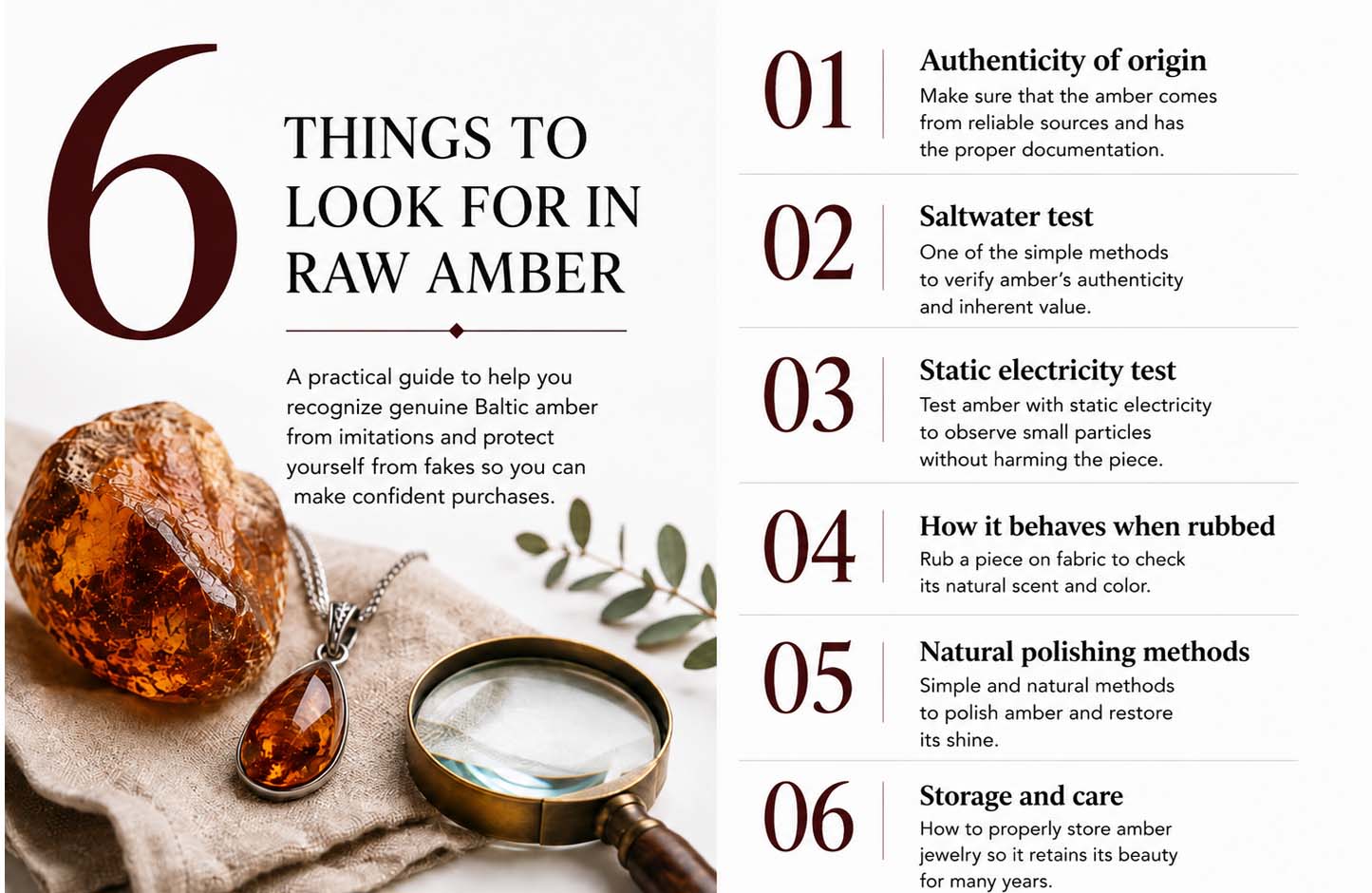
The global market is unfortunately filled with clever imitations crafted from synthetic plastics, colored glass, and immature resins known as copal. Understanding the physical properties of authentic fossilized resin is absolutely crucial. If you are wondering exactly how to tell if amber stone is real, you must realize that true prehistoric gems possess distinct physical characteristics that factory machines simply cannot replicate.
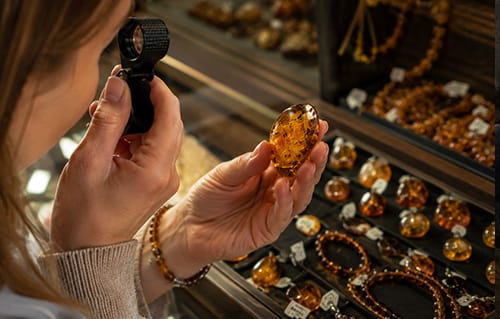
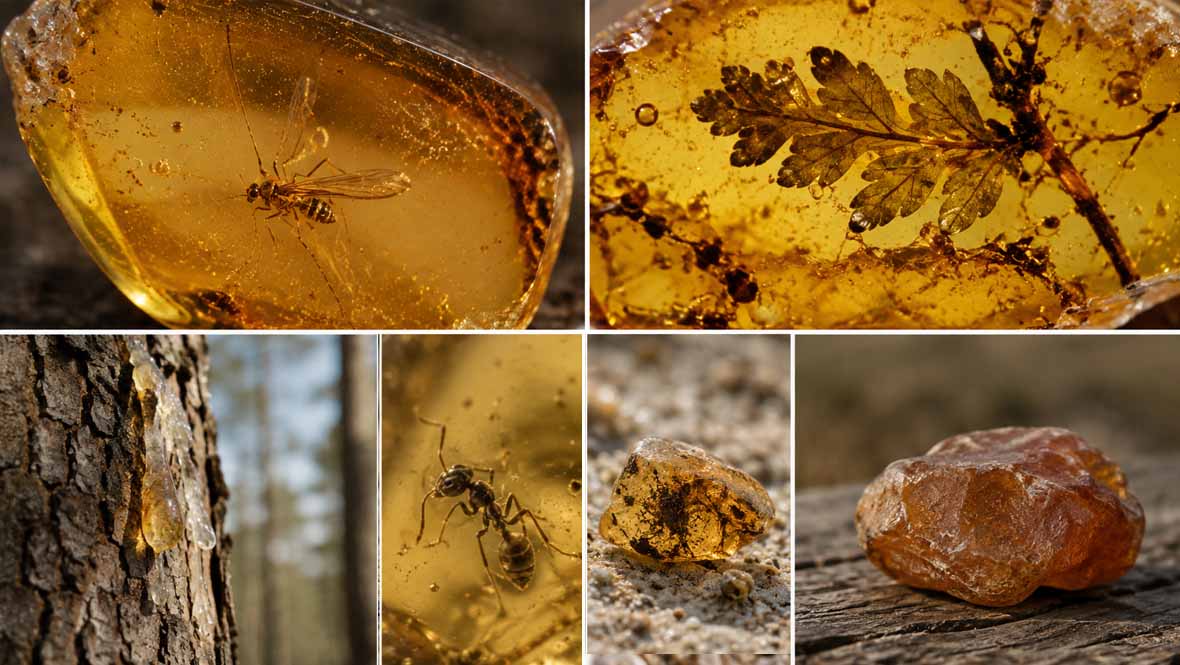
One of the most profound ways to verify authenticity is by closely observing the natural imperfections. Because our local artists shape each piece entirely by hand, whether they are crafting delicate amber necklaces or elegant amber earrings, you will always notice subtle organic variations. We actively teach our visitors to embrace these flaws. A tiny internal bubble, a speck of trapped prehistoric plant matter, or a slight color variation is never a defect. Instead, it serves as absolute proof that your gem was born in a wild primeval forest millions of years ago, carrying the true soul of the craft.
Weight
Real
Lightweight
Fake
Heavy, dense
Warmth
Real
Warm, heats up quickly
Fake
Stays cold
In Salt Water
Real
Floats on the surface
Fake
Sinks
Static Electricity
Real
Attracts paper
Fake
Does not attract
Inclusions
Real
Natural, irregular
Fake
None / too perfect
Surface
Real
Uneven
Fake
Smooth, uniform
Discover our Baltic amber collection
Handcrafted jewelry, souvenirs, and gifts made from authentic Baltic amber.
The Weight and Temperature Evaluation
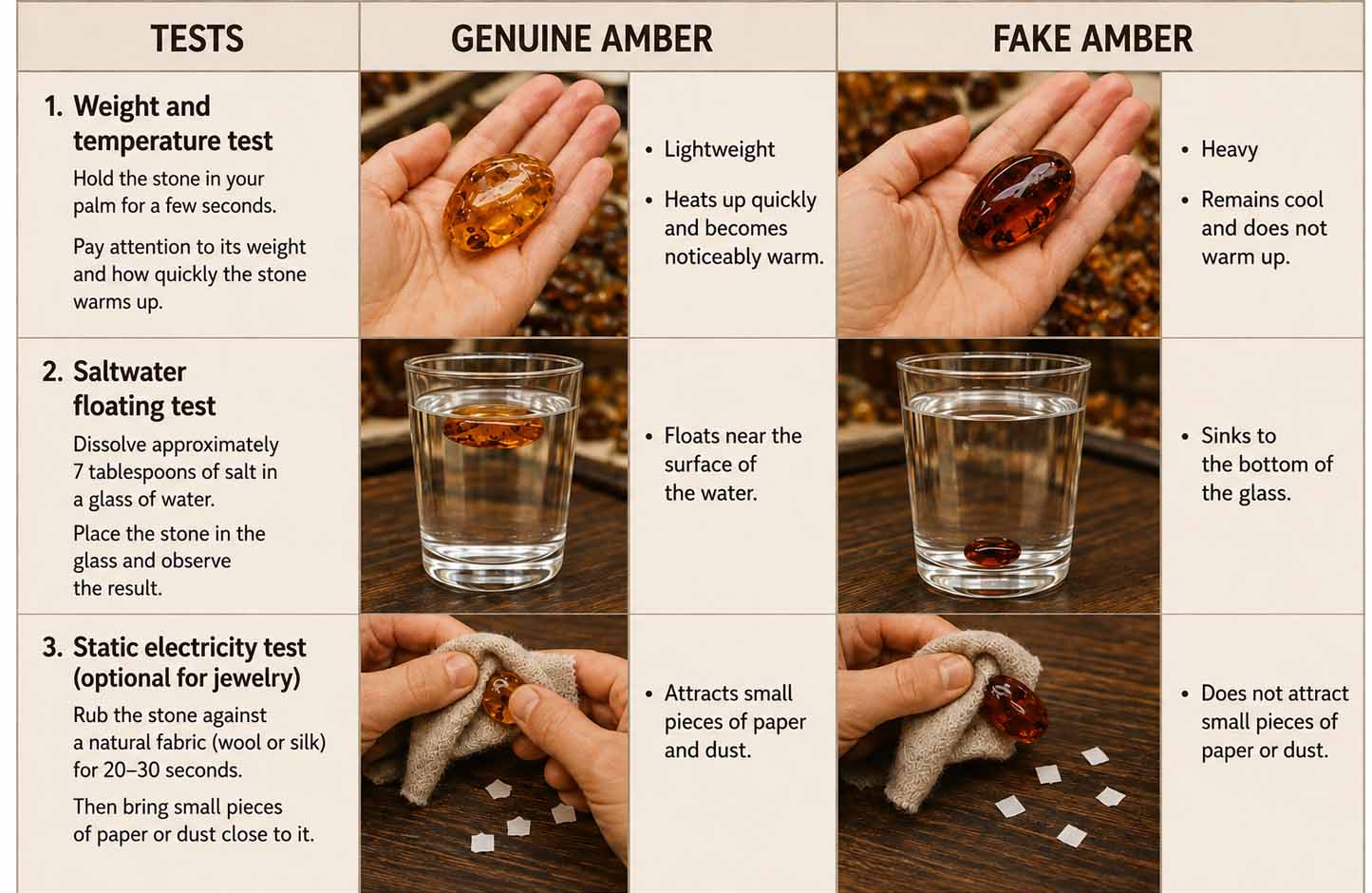
The very first step craftsmen take when verifying a piece is evaluating its physical presence and thermal conductivity. Counterfeit stones made of glass will immediately feel heavy and distinctly cold against your skin. Genuine fossilized resin, on the other hand, is surprisingly lightweight.
When you hold a real stone in the palm of your hand, it quickly absorbs your body heat and becomes comfortably warm to the touch. This organic warmth is a signature physical trait that plastic and glass can never successfully mimic. If you pick up a large glowing bead and it feels unexpectedly dense or chilly, you are likely holding a modern synthetic replica rather than a genuine prehistoric treasure.
The Saltwater Flotation Test
For unmounted stones, the saltwater test remains one of the most reliable and scientifically grounded identification methods used by professionals across the Baltic coast. The ancient pine resin that washed ashore possesses a unique specific gravity that allows it to float in dense ocean water.
To perform this evaluation accurately at home, simply dissolve roughly seven tablespoons of regular table salt into a medium sized glass of tap water. Gently drop your unmounted stone into the glass. A genuine prehistoric gem will naturally float near the surface due to its low density, while cheap plastic imitations and heavy glass will immediately sink straight to the bottom. Knowing how to tell if amber stone is real using this method provides immediate peace of mind for serious collectors.
How to Tell Real Amber from a Fake
| Test | Real Amber | Fake Amber |
|---|---|---|
| Weight | Lightweight | Heavy, dense |
| Warmth | Warm, heats up quickly | Stays cold |
| In Salt Water | Floats on the surface | Sinks |
| Static Electricity | Attracts paper | Does not attract |
| Inclusions | Natural, irregular | None / too perfect |
| Surface | Uneven | Smooth, uniform |
The Static Electricity Test for Worn Jewelry
If you are testing fully assembled jewelry like beautifully crafted amber bracelets, submerging them in saltwater might damage the threads or delicate metal clasps. In this scenario, we highly recommend the static electricity test.
Genuine fossilized resin is highly electrostatic. If you vigorously rub a piece of real material against a natural fabric like wool or silk for about twenty to thirty seconds, it will become electrically charged and easily attract tiny pieces of tissue paper or dust. Synthetic plastics will simply become warm without producing any significant static charge, clearly revealing their artificial nature.
Expert Care Guide Preserving Your Authentic Prehistoric Gems
Once you successfully verify your piece using the methods above, the next crucial step is proper daily maintenance. Because this material is an organic fossilized resin rather than a hard mineral extracted from deep underground, it requires very specific and gentle handling. Visitors who purchase authentic items from our Kungu iela shop often ask us how to protect their new heirlooms from daily wear and tear.
The Safe Method on How to Clean Amber Stone
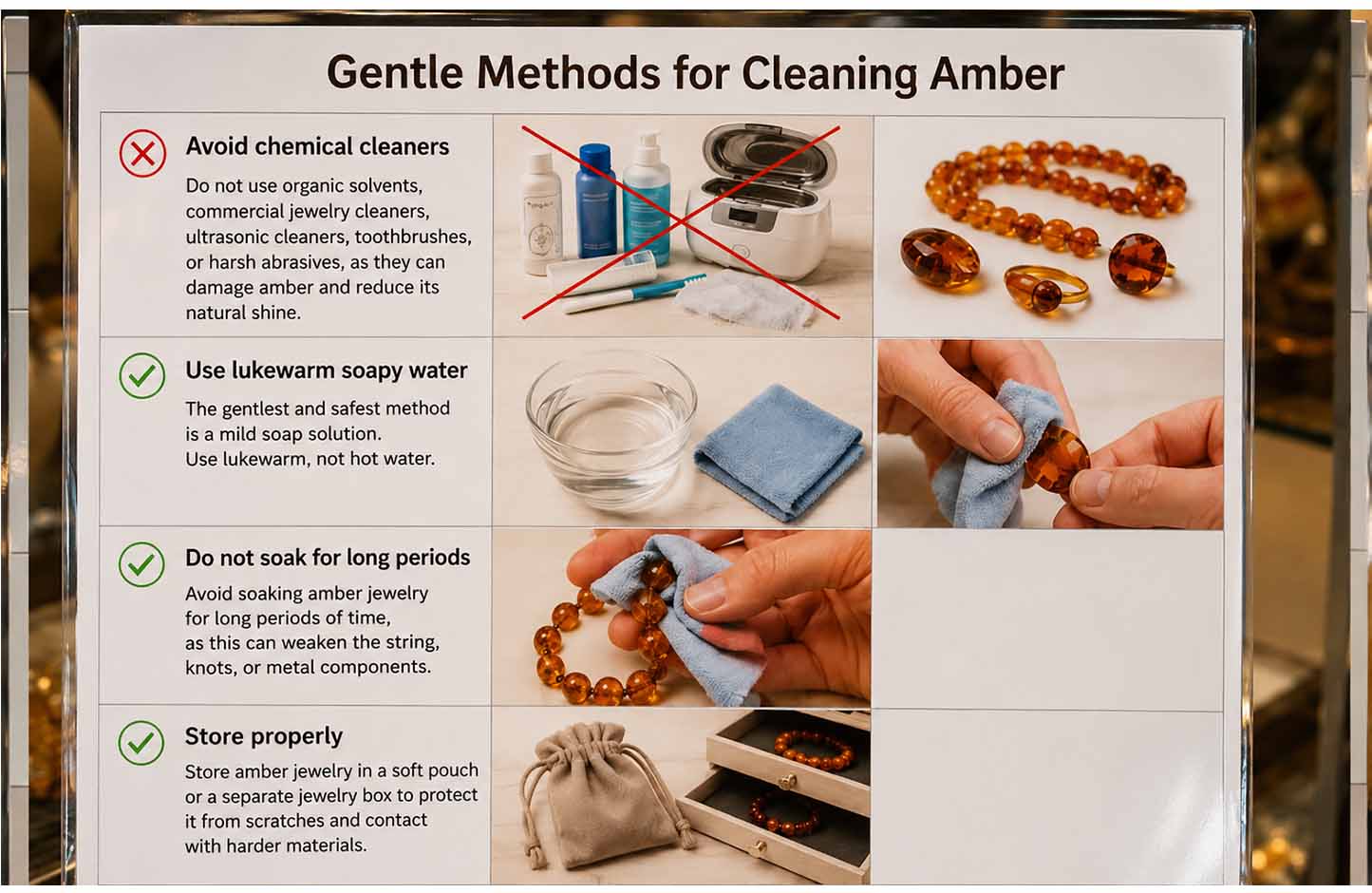
Regular gentle cleaning is absolutely essential to maintain that signature warm glow. If you are wondering exactly how to clean amber stone correctly, you must strictly avoid common jewelry store methods. Because the material is organically derived from ancient tree sap, improper care will instantly strip away the natural luster. Follow these precise rules to keep your pieces safe:
Avoid Chemical Solutions
You must absolutely never use commercial jewelry dips, ultrasonic cleaners, or harsh household detergents on organic resin.
Use Pure Water
The safest approach requires only a soft microfiber cloth lightly dampened with plain lukewarm water.
Remove Daily Residue
Gently wipe away any accumulated skin oils, cosmetics, or perfumes from your pieces every evening after wearing them.
Store Safely
Always place your gems into a soft velvet or silk fabric pouch to prevent accidental scratches from harder metals in your jewelry box.
Natural Techniques for How to Polish Amber Stone
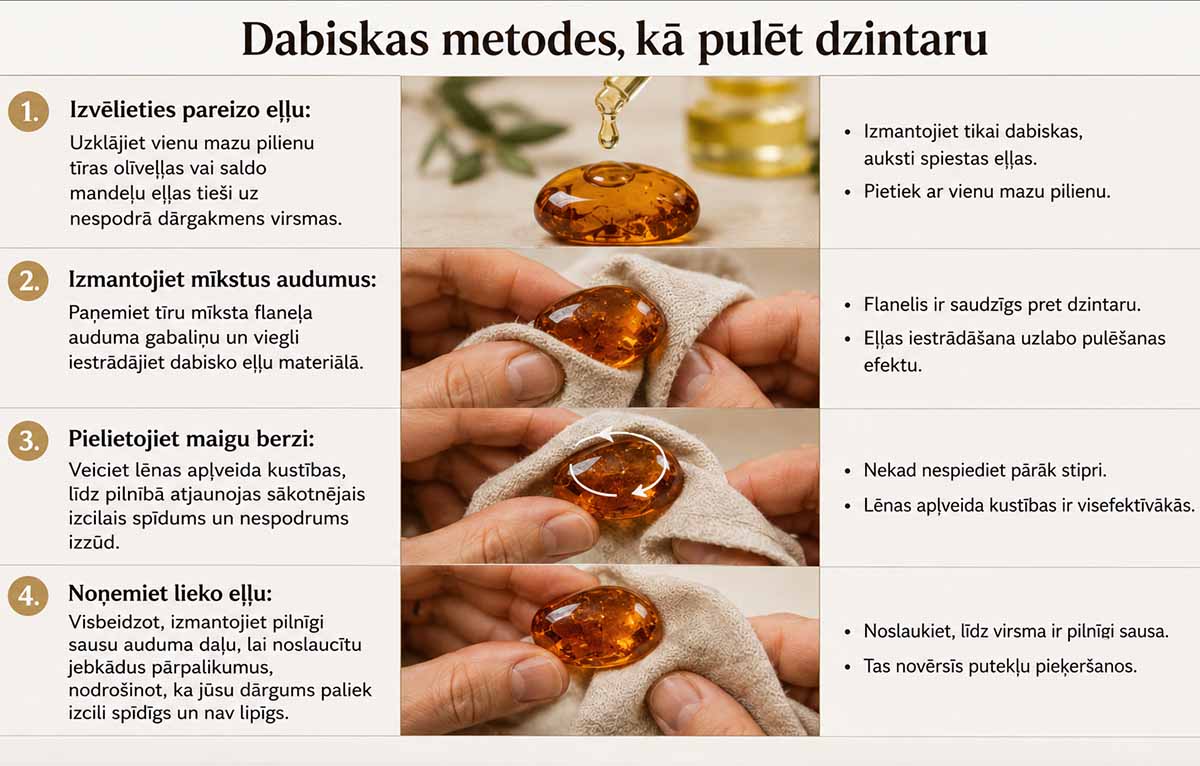
Over time, even the most carefully stored gems might begin to look slightly cloudy due to natural environmental oxidation. Learning exactly how to polish amber stone at home will save you an unnecessary trip to a professional jeweler. Our local artisans across Latvia use these exact natural steps to restore the brilliant shine:
Select the Right Oil
Apply a single tiny drop of pure olive oil or sweet almond oil directly onto the surface of the cloudy gem.
Use Soft Fabrics
Grab a clean piece of soft flannel cloth and gently rub the natural oil into the material.
Apply Gentle Friction
Use slow circular motions until the original brilliant shine is fully restored and the cloudiness disappears.
Remove Excess Oil
Finally, use a completely dry section of the cloth to wipe away any leftover residue, ensuring your prehistoric treasure remains brilliantly glossy and not sticky.
Knowing exactly how to tell if amber stone is real is only the beginning of your journey. Proper organic maintenance guarantees that your genuine Baltic heritage piece will survive for decades, eventually becoming a cherished heirloom passed down to the next generation without losing its timeless beauty.
The True Value of Authenticity
Mastering exactly how to tell if amber stone is real is about much more than simply protecting your wallet from clever tourist traps. It is about safeguarding a profound physical connection to our prehistoric earth. When you choose to invest in a genuine fossilized gem, you actively reject the cold mass produced plastic culture that dominates modern retail. Instead, you become a guardian of ancient Baltic heritage, supporting dedicated local artisans who pour their soul into every single piece they craft by hand. The true value lies not just in the millions of years of geological history, but in the enduring human tradition that shapes it.
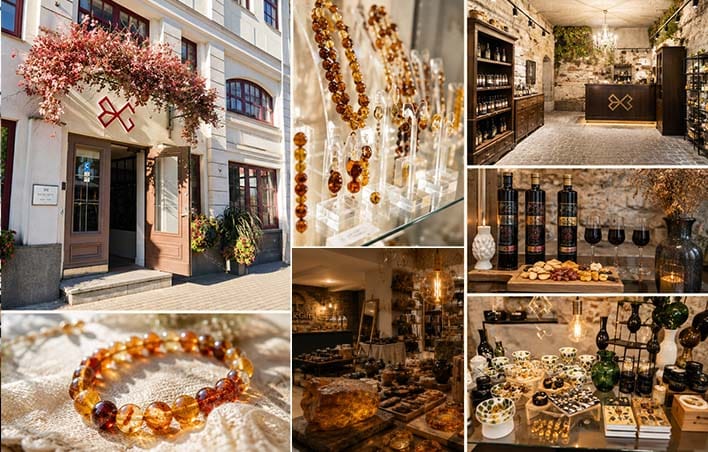
We warmly invite you to experience this rich history firsthand. If you are exploring the beautiful cobblestone streets of Latvia, step into our family run BalticGifts flagship shop located at Kungu iela near the House of the Blackheads in Old Riga. Descend into our authentic 17th century stone cellar to enjoy a relaxed Taste of Latvia degustation featuring Riga Black Balsam and local delicacies while holding these stunning handcrafted collections in your own hands.
If you are shopping from afar, explore our extensive online catalog for a completely stress free gifting experience with secure international delivery. Take action today and secure a beautiful authentic prehistoric heirloom that your family will proudly cherish for generations.
Frequently Asked Questions (FAQ)
To help you navigate our wide selection even better and make the right choice, we have compiled answers to the most frequently asked questions.
BALTIC AMBER JEWELRY
Discover the timeless beauty of authentic Baltic amber.